History of Neptune in Aries
- taylorwright1503

- Jan 30
- 9 min read
Updated: Feb 26

What does Neptune in Aries represent?
In world astrology, Neptune in Aries symbolises the idealisation of action and the dissolution of old identities through conflict, vision and ideological awakening. Neptune is associated with dreams, illusion and disillusion, sacrifice and collective ideals whilst Aries governs initiative, war, strength and the assertion of identity.
Combined, this transit correlates with the ideal of the self through inspiration, martyrdom and mythic narratives. We shift away from mass escapism and emotional distraction (Neptune in Pisces) towards ideological mobilisation and identity-driven conflicts (Neptune in Aries). Confidence is less about rigid structures and more about idealised heroism, symbolic battles and visionary crusades. Leadership often takes on prophetic tone, and movements are often action motivated by belief, image and moral conviction rather than purely material strategy.
Under this transit, heroism is glamourised but distorted, it romanticises the need to fight for a noble cause. Conflicts are driven by faith, identity, autonomy and perceived destiny.
Historically, Neptune in Aries aligns with periods of ideological warfare, spirtually charged conflict and wars of religion. It escalates debates regarding national identity, moral righteousness, sacrefice and justifcation of force. In 2026, we have already seen this via moral framing of international conflicts as identity battles: AI-generated war propaganda reshapes public perception of armed conflict. Although it can inspire courage, it can produce identity confusion, an "every man for himself" collective mentally and movements driven by myth over clarity. Ultimately, this transit dissolves how we fight, lead and define who we are shaping collective identity for generations.
Neptune takes approximately 165 years to travel through all 12 zodiac signs. It takes 14 years to transit one zodiac sign. Below are the past years that Neptune was in Aries and the current transit:
Previous Transits: Current Transit:
879-892 30th March 2025 - 22nd Oct 2025.
1042-1057. 26th Jan 2026 - 22nd May 2038.
1206-1220. 21st Oct 2038 - 23rd Mar 2039.
1370-1384.
1553-1548.
1697-1712.
1861-1875.
*Neptune was not discovered until September 1846 so the transits before this happened before we knew the planet existed.
879-892: The Early Middle Ages
22nd April 879 - 14th Sept 879.
9th March 880 - 27th Oct 891.
4th Feb 892 - 18th Apr 892.

Alfred the Great reigned as the King of the Anglo Saxons (879): he was most commonly known for defending Wessex (Southern England today) against Vikings and his attempts to improve people's lives via several legal, education and military reforms. After successful Viking occupation in 886, he recaptured London after defeated a Danish garrison and soldified his position as the leader of all English people not under Danish rule.
Before Alfred the Great's death (886): Alfred the Great promoted the importance of education and literacy. During this period, he was also credited for developing the first English navy. Although this didn't became a permanent institution, it led to the adoption of later developments in English naval power.
The Siege of Paris (885-886): massive Viking forces besieged Paris, France for months. Due to strong fortifications, the seige did not manage to capture the city. The siege exposed the weaknesses of the Carolingian dynasty, an empire in Western and Central Europe.
1042-1057: The Byzantine Empire
13th May 1042 - 27th Aug 1042.
11th Mar 1043 - 30th Apr 1056.
21st Nov 1056 - 25th Feb 1057.

Constantine IX's Reign in Byzantium (1042-55): he ruled when the Byzantine Empire had been internally weakened. His reign was characterised by military neglect and theological tensions. Although the empire still appeared powerful from the outside, its military foundations eroded. This created an illusion (Neptune) around strength (Aries) drive by image and religious politics.
Rise of the Seljuk Turks (1040s-1055): the Seljuk Turks (a Muslim dynasty/empire that covered Central Asia, Iran and the Middle East) defeated the Ghaznavids (Persianate Muslim empire of Turkic slave origin). They rapidly expanded westward and eventually entered Baghdad in 1055. Warfare was tied to faith and ideological legitimacy.
The Great Schism (July 1054): this was a separation between the Western Roman Catholic Church and the Eastern Orthodox Churches that were located in Constantinople (present-day Istanbul). This was the culmination point of centuries of estrangement in medieval Christianity. As a consequence, it permanently divided Christians into Western and Eastern branches.
Battle of Atapuerca (1054): this was fought at the site of Piedrahita, called the "standing stone", in Atapuerca (present-day Burgos, Castille and León in Spain). This was between 2 brothers: King García of Navarre was killed by his brother Ferdinand I. The Castillians won and the brothers favourite Fortún Sánchez was also killed. Ferdinand reannexed Navarrese (Northern Spain) territory he had conceded to García 17 years prior after his brother's assistance at Pisuerga (river in Northern Spain).
Macbeth's Reign in Scotland (1040-57): the real historical Macbeth ruled Scotland. After victory over King Duncan I in battle, he seized the throne. Contrary to Shakespeare's play, Macbeth's reign was mainly peaceful, he was allowed to make a pilgrimage to Rome. However, he was defeated and killed by Malcolm Canmore during the Battle of Lumphanan.
Norman Expansion in Southern Italy (1040-50s): Norman mercenaries conquered territories in Southern Italy, they established Christian rule and shifted from serving Lombard/Byzantine masters to securing independent lordships. The Hauteville Brothers (Norman) and the Rainulf of Aversa (also Norman) conquered Byzantine Apulia and Calabria (Southern Italy): this culminated in the significant victory at Battle of Civitate (Southern Italy) in 1053.
1206 - 1219: The High Middle Ages
21st Apr 1206 - 22nd Sep 1206.
21st Feb 1207 - 16th Jun 1219.
22nd Sep 1219 - 12th Apr 1220.

Romans into the thick of the Christian Crusades (1095-1291): these were several religious wars initiated by the Roman Catholic Church, they wanted to reclaim the Holy Land from Islamic rule. This included Jeruselum in Israel and involved Western European Christians who fought against Muslim forces and even other Christian groups in some circumstances.
Genghis Khan founded the Mongol Empire (1206): this was the largest empire in history from the Sea of Japan to Eastern Europe. After targeting the Western Xia and Jin dynasty in northern China, he expanded his conquest into Eurasia. These conquests stretched from the Pacific Ocean to Eastern Europe and the Persian Gulf and also encompassed large parts of Asia.
The Franciscan Order founded in Assisi (1209): by Francis of Assisi who had later been made a saint. It was a group of related organisations within the Catholic Church. They preached a simple life of poverty and they served the poor and marginalised in their communities.
The Order of Dominicans established (1216): this was a Roman Catholic religious order founded in France by Saint Dominic de Guzman, a Spanish preist. This organisations predominantly aimed to combat hersey and spread devotion to the Church. Members were encouraged to learn about philosophy, theology and to interact with those from different walks of life.
The Franciscans prioritised service to the poor: in stark contrast, the Dominicians were focussed on educating, preaching and teaching. Both Church orders influenced the religious and intellectual trends of the time despite their differences.
1370 - 1384: The Late Middle Ages
3rd Apr 1370 - 16th Oct 1370.
31st Jan 1371 - 25th May 1383.
18th Oct 1383 - 25th Mar 1384.

The Hundred's Year War (1337-1453): this was sparked after Edward III of England claimed the French throne and England held land in France. Expansion of Naval Warfare increased during the 1370s: this period saw intentified conflict between England and France including raids on coastal towns and battles over Channel dominance. Aries brought warfare to Neptune's domain, the sea.
The Caroline War (1370): this happened during the second phase of the Hundred Year's War. King Charles I asserted English dominance at sea which led to tensions with France over trade routes and colonies. Aries brings conflict to the Neptunian realm of the ocean.
Western Schism (began 1378): rival popes were elected in Rome and Avignon (France), this crisis divided the Catholic Church. This split Western Christianity, Europe was divided in loyalty with different kingdoms supporting different papal claimants. Religious unity dissolved into identity-based confrontation, this was a classic case of religion (Neptune) expressed via division (Aries).
Peasant's Revolt (30th May - Nov 1381): this was led by Wat Tyler and began due to social and economic outrage. The 1380 Poll Tax of 12 pence per adult was imposed, this disappointed peasants, artisans and townspeople. Rebels marched on London and destroyed property in demand for reform and an end to serfdom. Although this revolt had been suppressed, it nevertheless had a sustaining impact on English society and history.
John Wycliffe published first translation of the Bible into English (1382): although he did not translate the entire Bible independently, he oversaw the remaining process when scholars Nicholas Hereford and John Trevisa translated the rest.
1533 - 1548: The Early Modern Period
24th May 1533 - 14th Aug 1533.
28th Mar 1534 - 20th Nov 1534.
1st Jan 1535 - 8th May 1547.
10th Nov 1547 - 8th March 1548.

The Act of Supremacy (1534): this established the English monarch as the supreme head of the Church of England. This legislation allowed Henry VIII to declarate himself the leader. Such event was significant during the English Reformation since it severed King Henry VIII's connections with the Roman Catholic Church.
Jacques Cartier made 3 voyages to Canada (1534): he was accompanied by 60 sailors who handled 2 ships approximately weighing 60 tonnes each. After 20 days, he entered the Strait of Belle Isle, a waterway locared in eastern Canada which separates Labrador from Newfoundland.
The Monasteries were dissolved (1536-41): this led to a radical restructuring of English religious institutions and reflected impulsive (Aries) reforms that had a lasting societal impact. Relics, churches and monuments were also destroyed and many conflicts erupted between the Catholics and Protestants.
Pope Paul III established the Holy Office (1542): a Roman congregation and a system of tribunals investigated and prosecuted those who were accused of heresy, witchcraft and other crimes against the Catholic Church. This also aimed to bring an end to Protestantism and begin a counter reformation.
Henry VIII died (1547): this ended a turbulent reign, this had been characterised by dramatic political and religious change during his rulership. Edward VI succeeded him, he decided to continue to support Protestant reforms that Henry VIII was committed to before his death.
1697 - 1712: The Early Modern Period
30th Apr 1697 - 8th Sep 1697.
1st Mar 1698 - 3rd July 1710.
3rd Sep 1710 - 22nd Apr 1711.
8th Dec 1711 - 12th Feb 1712.
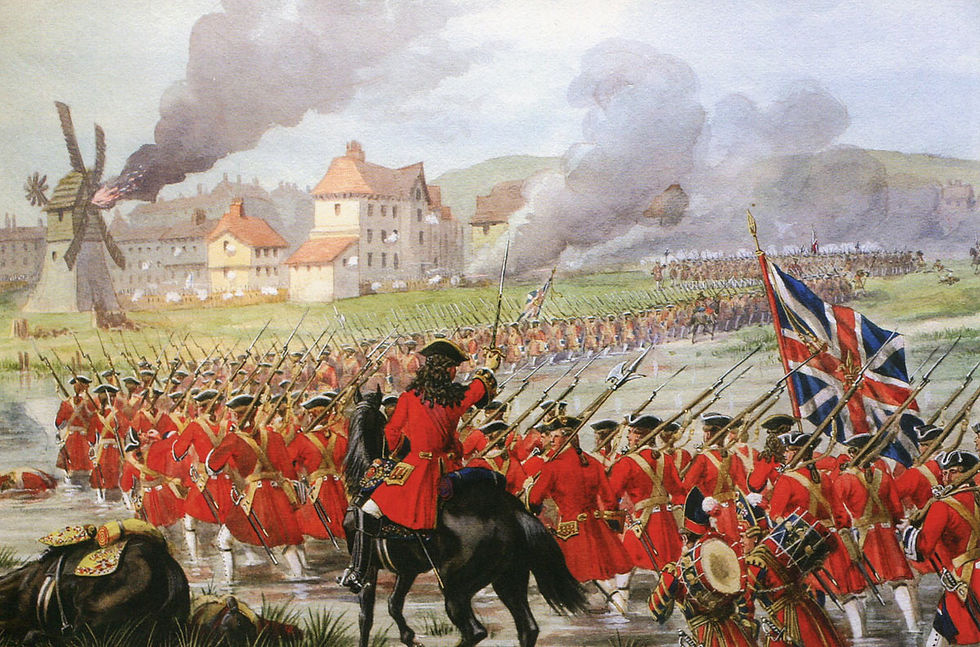
War of Spanish Succession (1701-14): this conflict began due to the death of Charles II of Spain in 1700 without children and an heir to the throne. This triggered competing claims to the Spanish throne and highlighted impulsive power struggles and shifting alliances. Charles eventually designated Philip of Anjoy as his successor, however this sparked fears of a combined French and Spanish empire. England captured Gibraltar in attempt to develop a naval base against spain.
Russian Tsar 'Peter the Great' founded Saint Petersburg (1703): it was the capital of the Russian Empire and remained so for over 200 years. This was a bold and visionary (Neptune) new city which represented Russian modernisation and imperial ambition in addition to pioneering spirit (Aries). Most signficantly, Saturn and Neptune were conjunct in Aries as it is in 2026.
The Act of Union (1707): this unified England and Scotland into Great Britain therefore building the formation of a single nation. This event was a bold political restructuring of a new national identity.
Jeremy Collier, published ‘An Ecclesiastical History of Great Britain' (1708): This challenged accepted religious views and authority and embodied the pioneering of new ideas (Aries). His critques upset the Nonjurors and the clergy. Collier's theological debates were both spiritually (Neptune) and impulsively (Aries) politically charged.
1861 - 1875: The Reconstruction Era
13th Apr 1861 - 1st Oct 1861.
14th Feb 1862 - 8th Jun 1874.
30th Sep 1874 - 7th Apr 1875.

American Civil War began (12th April 1861): Fort Sumter was attacked near Charleston Harbour in South Carolina, this was only one day before Neptune entered Aries. The Civil War lasted from 1861-1865 and was mainly caused by intense disagreements over the institution of slavery. The Southern states wanted to preserve slavery whereas the North aimed to preserve the Union. Notably, Neptune was in Aries simultaneously as Uranus in Gemini as in 2026-2033.
Core Cowboy Era (1865-95): the cowboy was a spiritual symbol of freedom, rugged individualism, masculinity and destiny. Neptune is Aries doesn't singularly produce war, it creates the myth of the warrior. Violence and conquest (Aries) were romanticised into identity (Neptune).
President Lincoln finally abolished slavery (31st Jan 1865): this was ratified under the 13th Amendment on 6th December 1865. As a consequence, parts of the United States split and formed the Confederate States of America.
The Canadian Confederation (1867): Canada became a country via the North America act which united Ontario, Quebec, Nova Scotia and New Brunswick into the Dominion of Canada. Unlike the United States, Canada was not formed due to violent revolution but it was still an act of identity assertion: a new nation stepped into political independence.
Post-Napoleonic Wars: the Holy Roman empire which comprised of the German Nation was separated into provinces and cities which were taken over by foreign rule. Many German citizens hoped for a unified Germany, however this did not come to fruition.
Kingdom of Prussia took action on Germany’s behalf: there was a surge of nationalism resulting in a strong feeling a loyalty and devotion to the country. However, there had been 3 wars of German unification and Germany was eventually refounded but the Prussian King was now the German Emperor.
Start of Germany as a global influence: increasing imperialism motivated Europe to gain territory, steal power from other countries and position themselves as a dominant world power. This was a significant factor to World War One and built up slowly over time.
Shared Themes - what do these periods have in common?


Comments